

It is always important to keep up with your dental hygiene — healthy habits build healthy smiles. When you have braces, though, a good routine for brushing and flossing matters even more, to keep your teeth and gums healthy throughout your treatment.
We recommend brushing after every meal. It helps prevent tooth decay and removes the plaque that collects around brackets and wires. If you need help choosing the right toothbrush, toothpaste for your gums, or the right way to floss, ask us — we have recommendations for products you will benefit from during treatment.
Brushing with braces
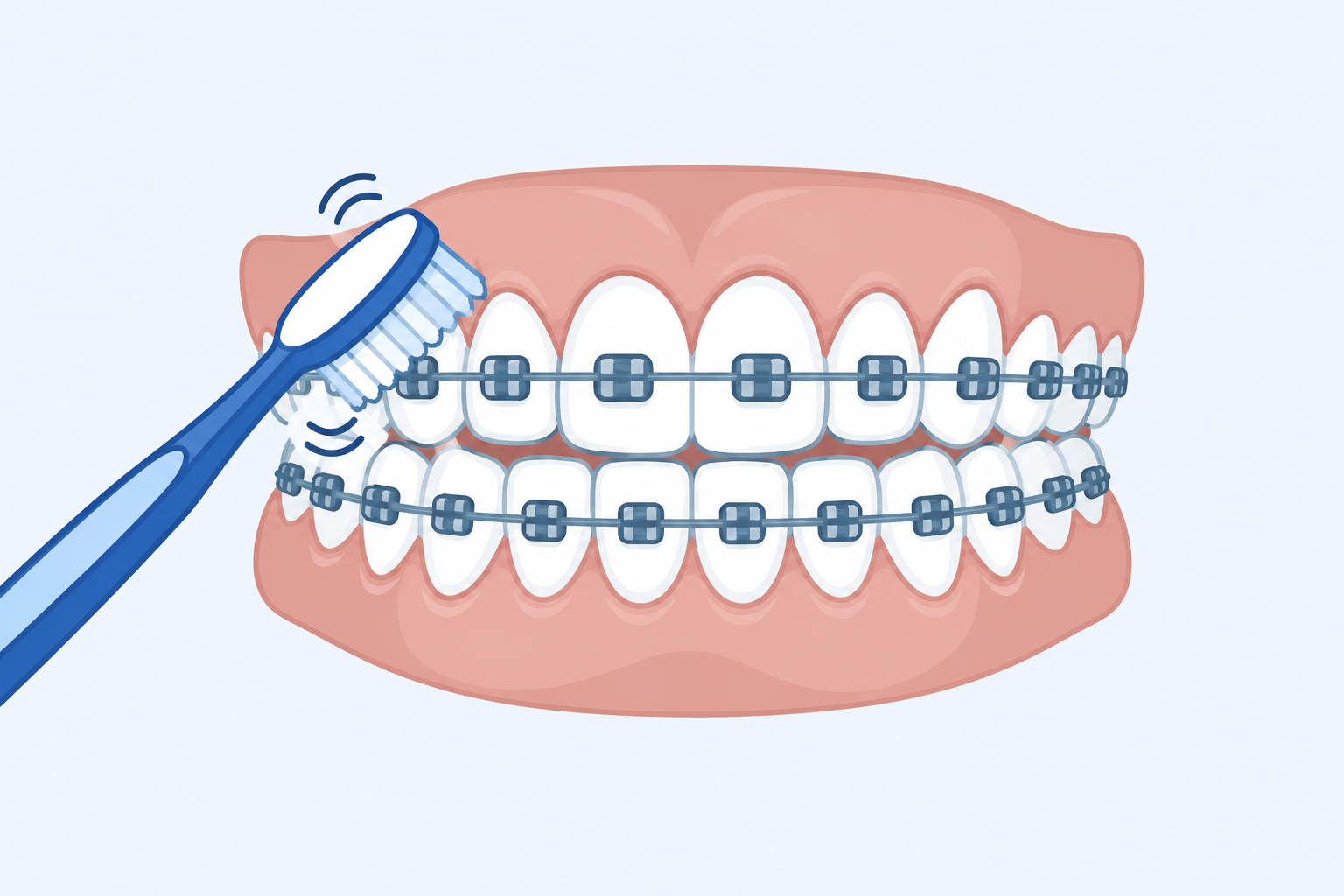
Brush your teeth for two minutes after every meal with a soft-bristled, small-headed toothbrush and fluoride toothpaste. A powered toothbrush can make this easier and more effective. Brush the outside and inside surfaces of your teeth using small, gentle, circular motions, with the head of the brush at a 45-degree angle to the gum line. Brush the chewing surfaces and the inside surface of your front teeth using short, gentle, back-and-forth motions. Pay close attention to the areas around your brackets or other appliances.
Flossing with braces
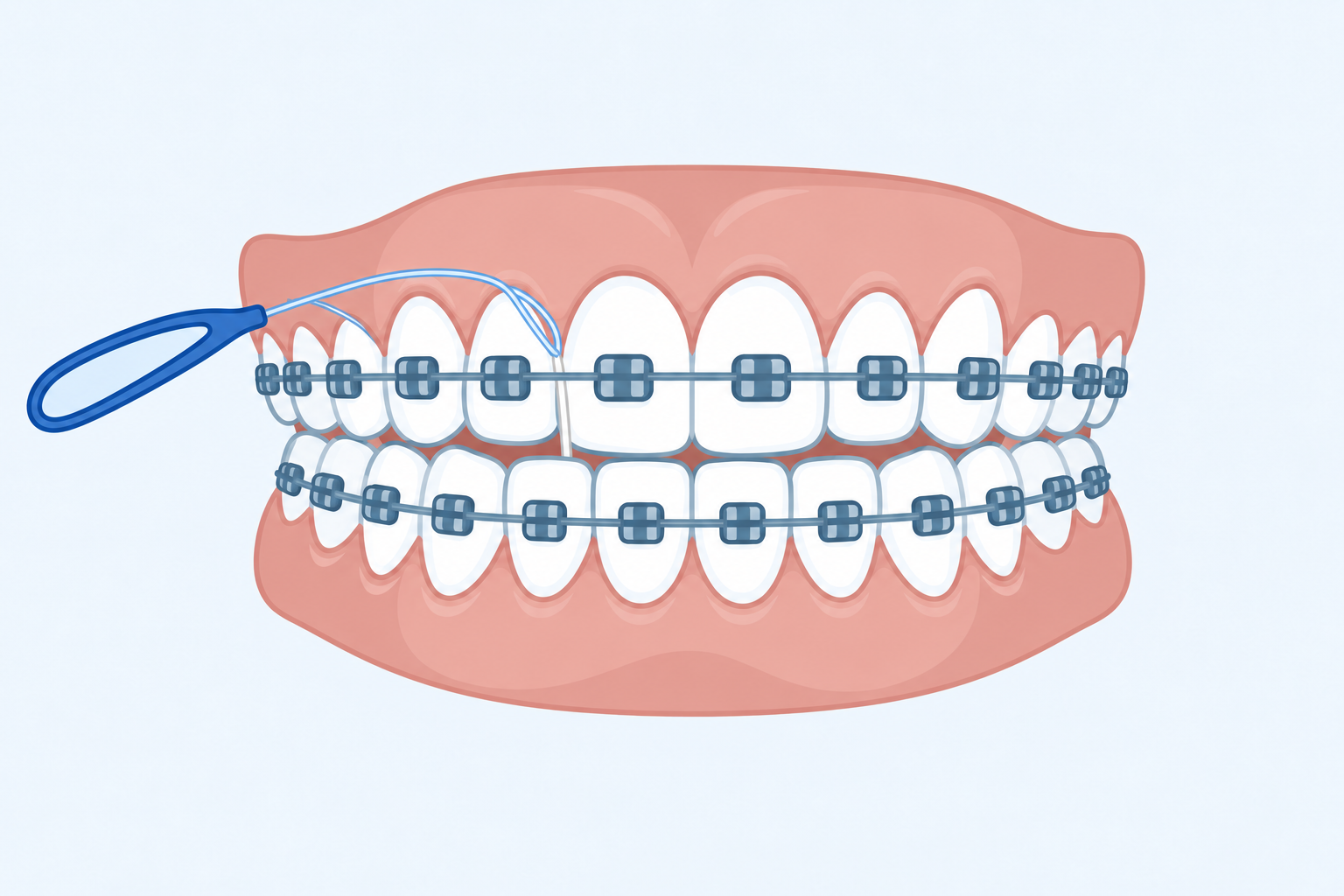
Flossing after every meal keeps your teeth and braces clean, which also helps keep your treatment time on track. To floss with braces, use a floss threader or special orthodontic floss to thread the floss behind each wire. Wrap the ends around the pointer fingers of both hands, leaving a few inches of taut floss between them. Gently slide the floss between each set of teeth using a back-and-forth motion, and floss the sides of each tooth beneath the gum line to remove plaque and food particles. Repeat until you have flossed all of your teeth. If floss is not removing everything between your teeth and around your braces, ask us about a water flosser.
A visual reminder
We have made a printable brushing and flossing guide — feel free to put it up by the bathroom mirror while you get into the routine.
And of course, if you have any questions or need any additional support, call us. We are here for you.